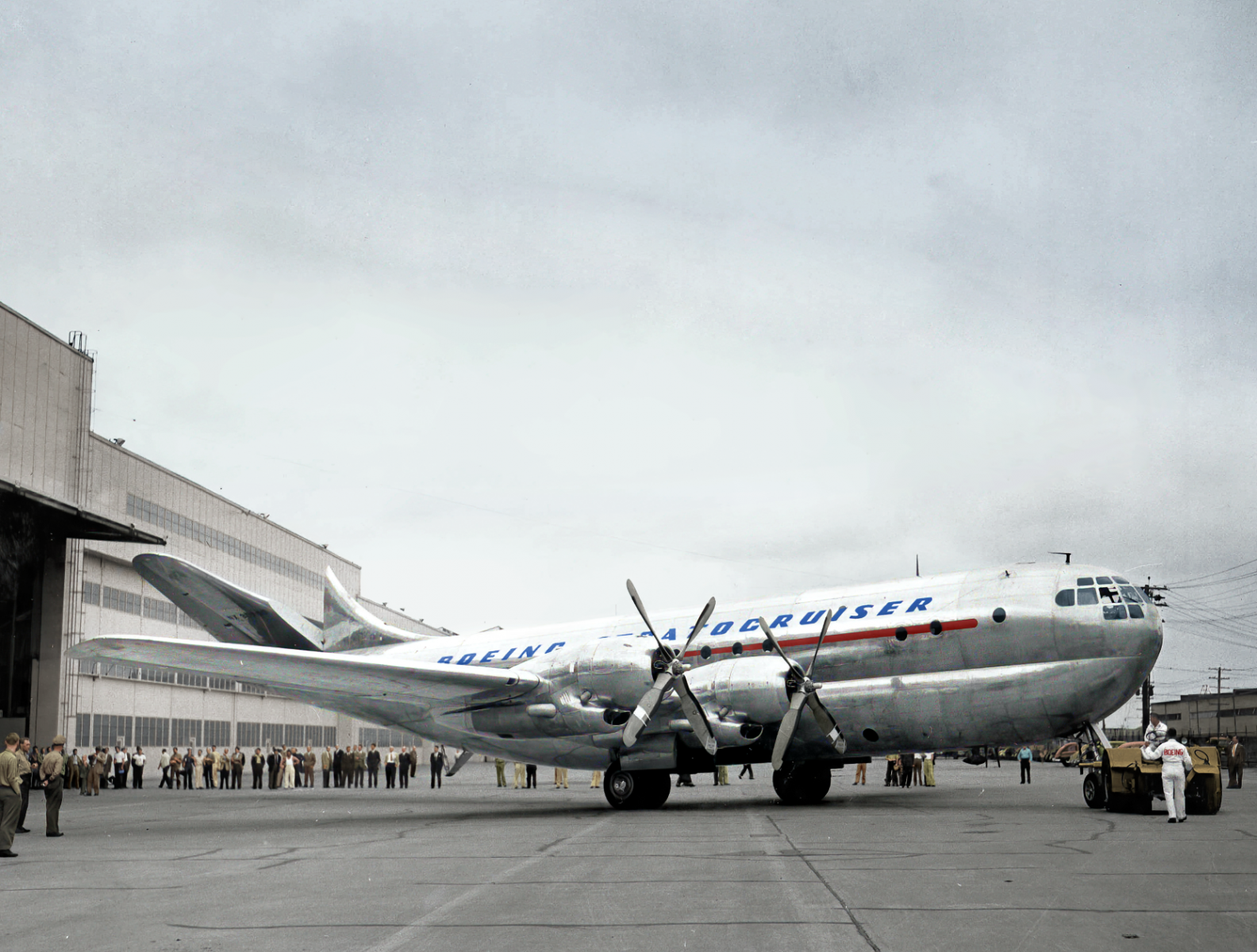
Roll out of the first Stratocruiser in June 1947. Credit Boeing Historical Archives colorised by Benoit Vienne.
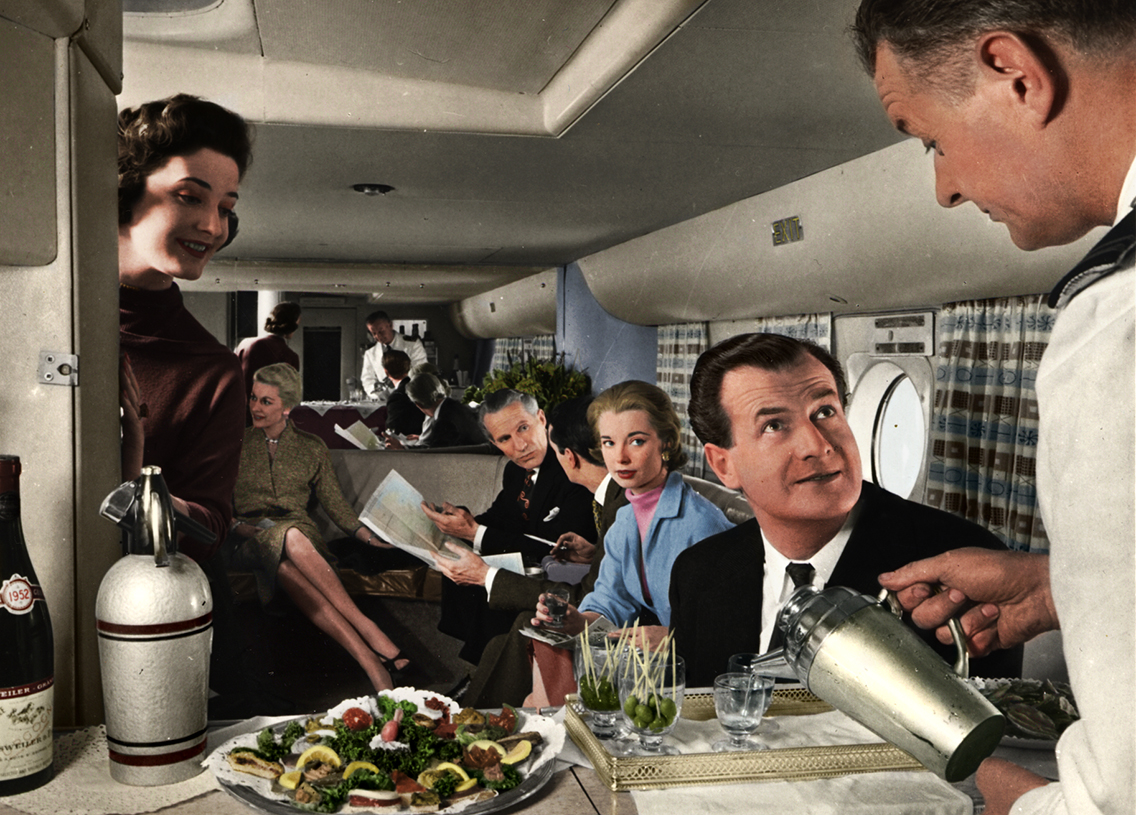
The Stratocruiser set a new standard for luxurious air travel with its tastefully decorated extra-wide passenger cabin and gold-appointed dressing rooms.
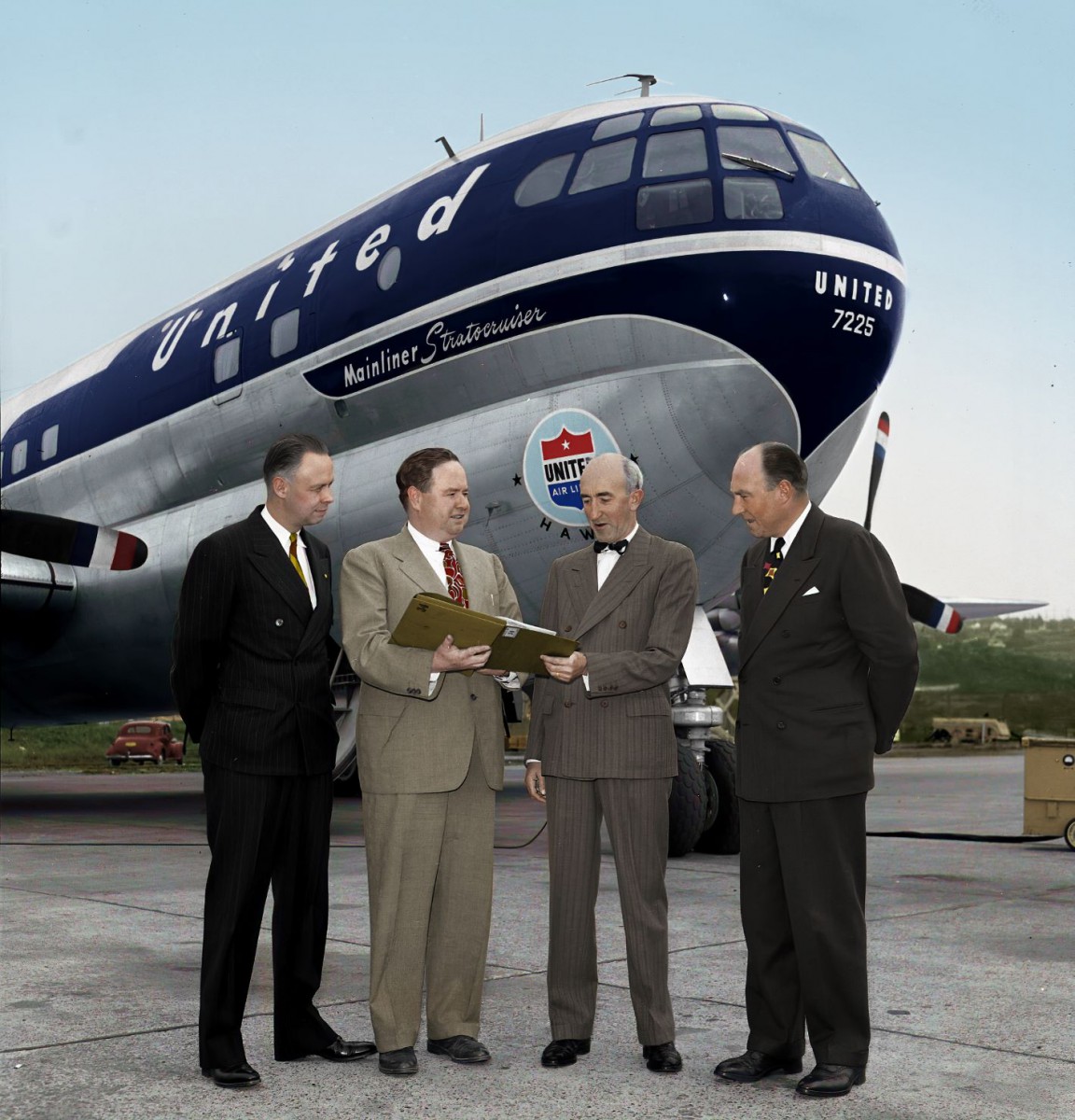
Handover of United’s first Stratocruiser in 1950. Center-right is Boeing President Bill Allen and center-left is United’s VP Engineering John Herlihy. Boeing Historical Archives colorized by Benoit Vienne. A circular staircase led to a lower-deck beverage lounge, and flight attendants prepared hot meals for 50 to 100 people in a state-of-the-art galley (see video below).
As a sleeper, the Stratocruiser was equipped with 28 upper-and-lower bunk units.
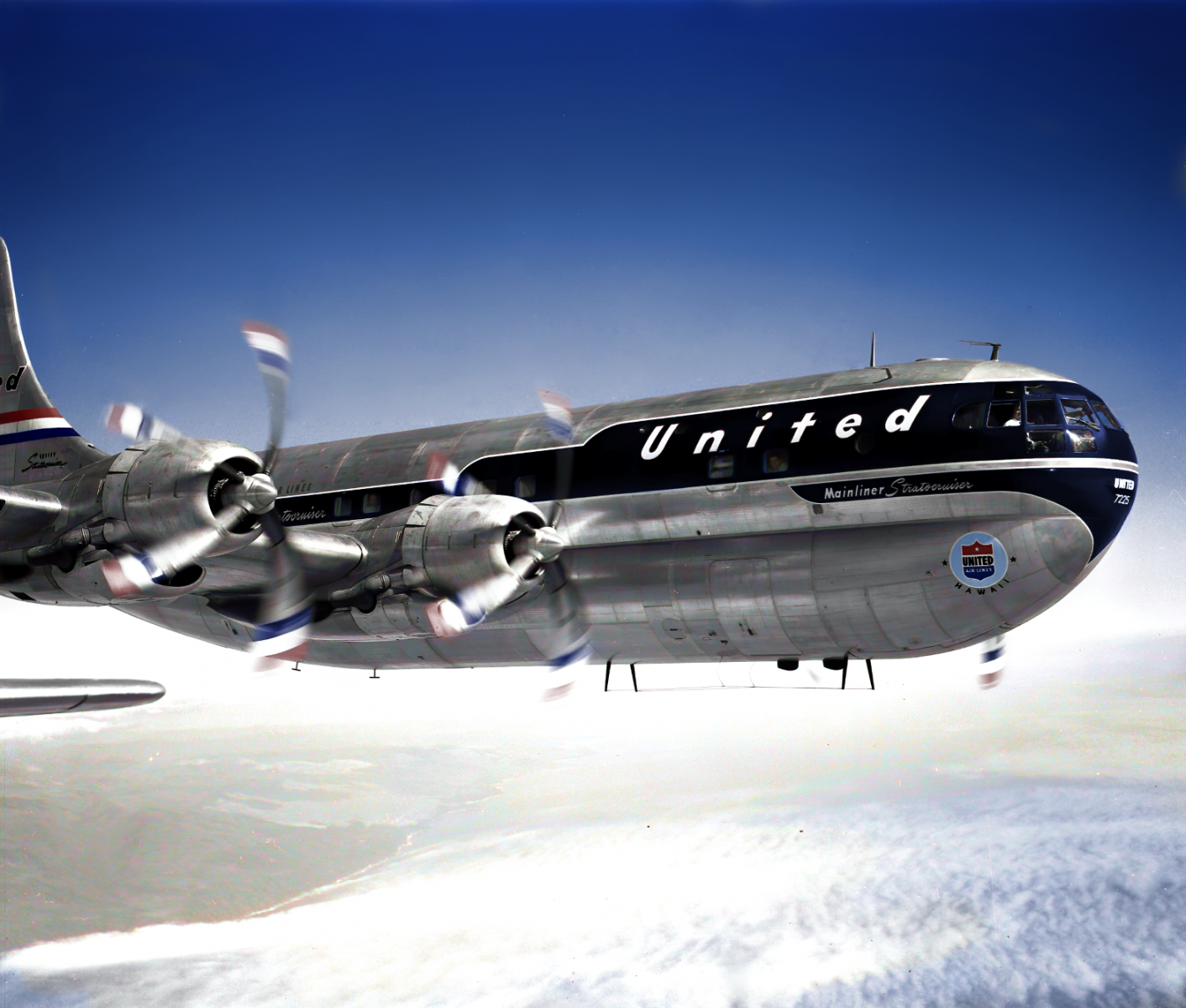
Pan American was the lead airline and began services between San Francisco and Honolulu in 1949.
Boeing only built 56 Stratocruisers between 1947 and 1950 because they were not as economical as the Douglas DC-6 and Lockheed Constellation.
For the first time, long-haul air travel had become easy, comfortable and more affordable, as Boeing, Douglas and Lockheed improved the performance of their designs to gain an edge.
Cabins featured soothing colours, wall murals, reading lights, air vents and soft curtains.
But the engines were a challenge.
The Stratocruiser was powered by four Pratt & Whitney’s R-4360 engines that produced 4,300hp.
It had 28 cylinders in four rows, 56 manually-adjustable valves and 56 spark plugs.
However, the Stratocruiser suffered an engine failure every 158 flights.
The post