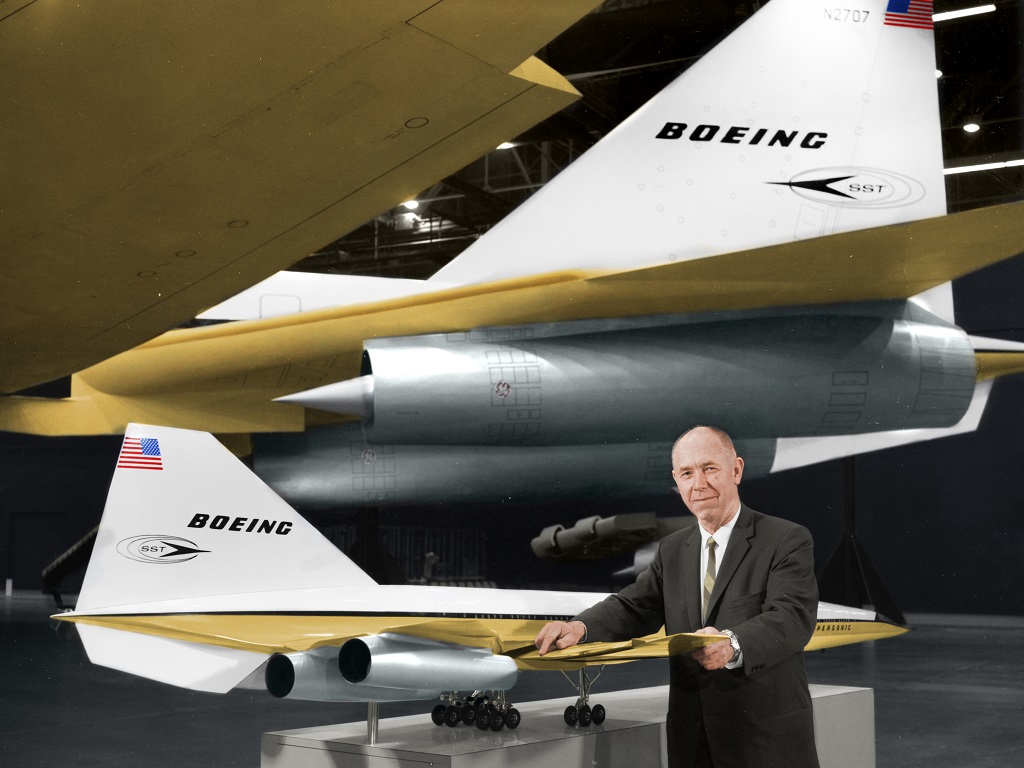
Maynard Pennell chief designer of the B2707 with the mockup. Boeing Historical Archives photo colorized by Benoit Vienne
Despite doubts, and because Pan American World Airways ordered six Anglo / French Concordes in 1963, President John F Kennedy launched the US counter to the Concorde, essentially on national pride.
The US Federal Aviation Administration (FAA) called for tenders from the US industry to build an aircraft superior to the Concorde.
Boeing, Lockheed, Douglas and North American responded.
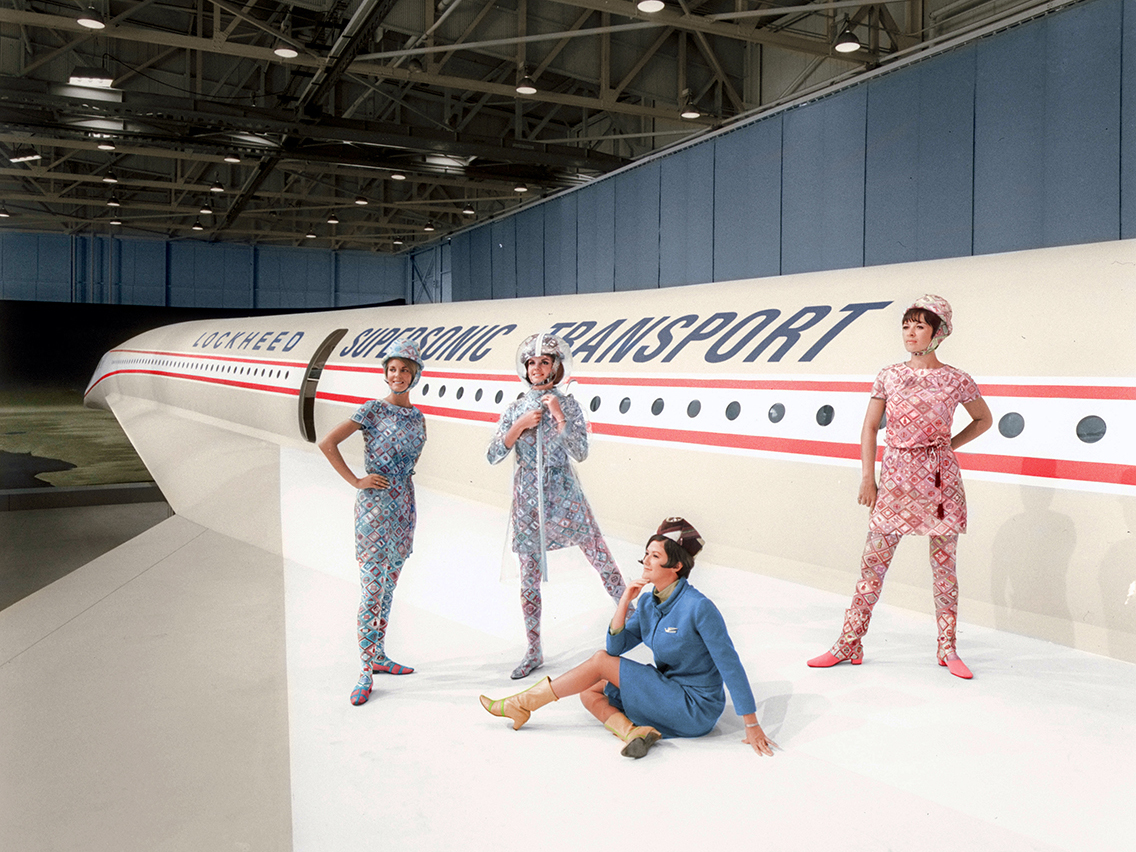
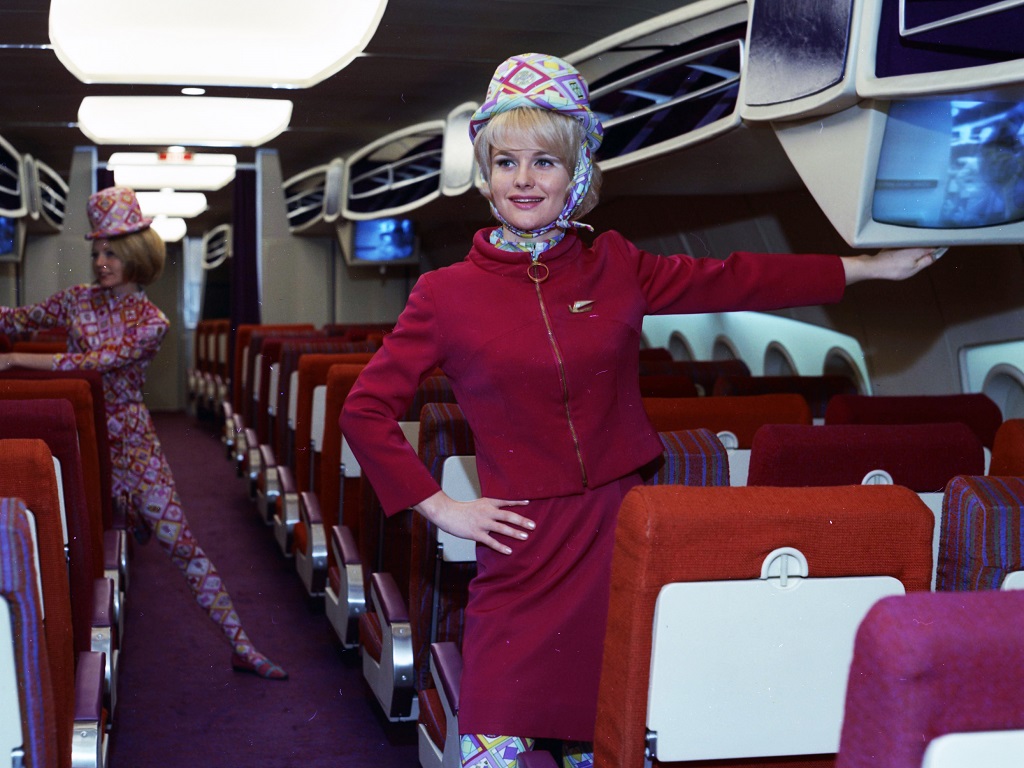
Mockup of Lockheed’s entry – the L2000- into the supersonic race with flight attendants from Braniff Airways. Boeing which took a high-risk technology road with a radical swing-wing submission won the competition in December 1966 by claiming its SST design would have seat mile costs below those of the 707.
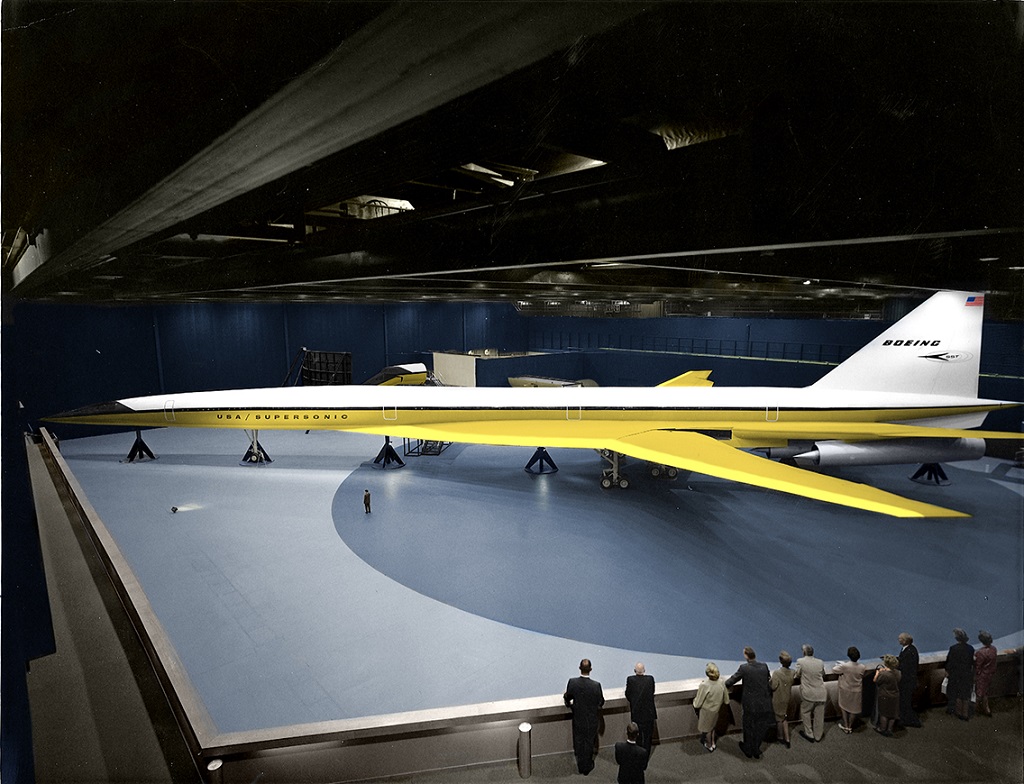
Boeing’s 2707 mockup. Boeing Historical Archives Boeing was to build two prototypes over four years at a cost of $1.44 billion in 1967 dollars or $35 billion today!
Twenty-six airlines took 122 delivery positions with Pan Am, TWA and Alitalia to be among the first to fly the jet.
The Boeing design was an extraordinary gamble based almost solely on the American “can do” attitude.
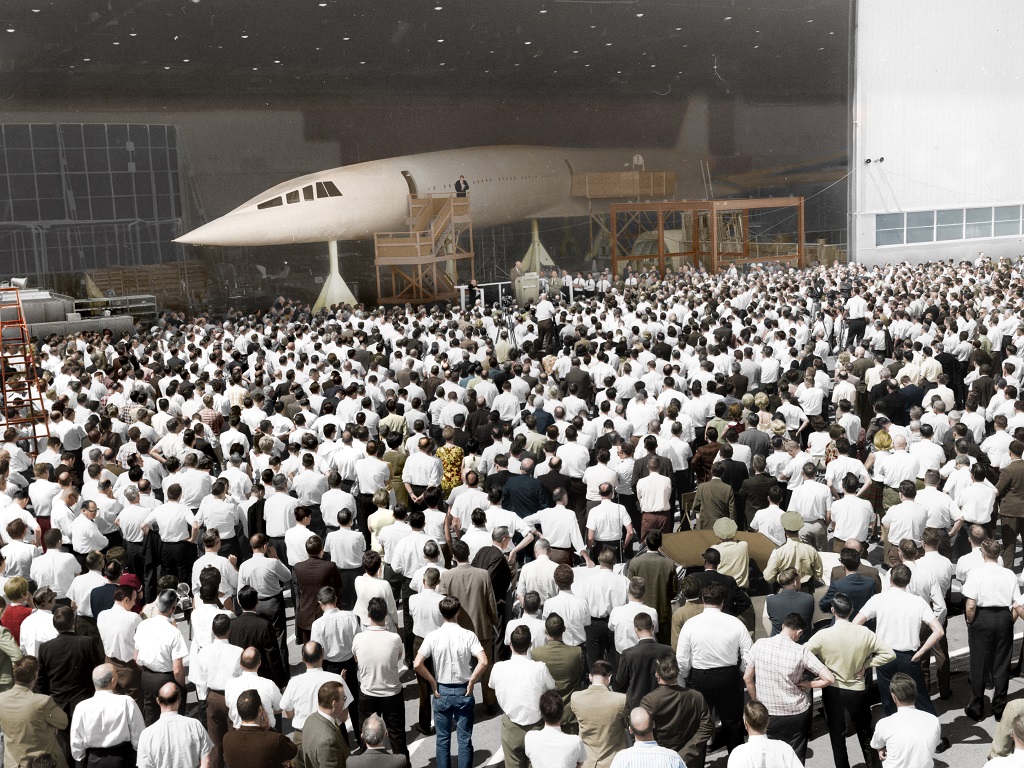
Boeing employees at the unveiling of the mockup under construction. Boeing Historical Archives image colorized by Benoit Vienne Because the B2707 was to fly at Mach 2.7 (1,800mph or 2,898km/h) it would have to be built entirely from stainless steel and titanium materials that were thought to be difficult to work with at the time.
But as work progressed, it became evident that the swing-wing design was flawed meaning the Boeing 2707 would be able to carry virtually no payload.
Also, the level of noise it produced together with the sonic boom, were now insurmountable difficulties.
Braniff Flight attendants pose in the mockup f the B2707. Boeing Historical Acrhives Boeing scrapped the swing-wing in October 1968 in favor of a fixed delta-wing design but as construction proceeded with the mock-up, the aircraft ran into another obstacle much greater than the sound barrier — the cost hurdle.
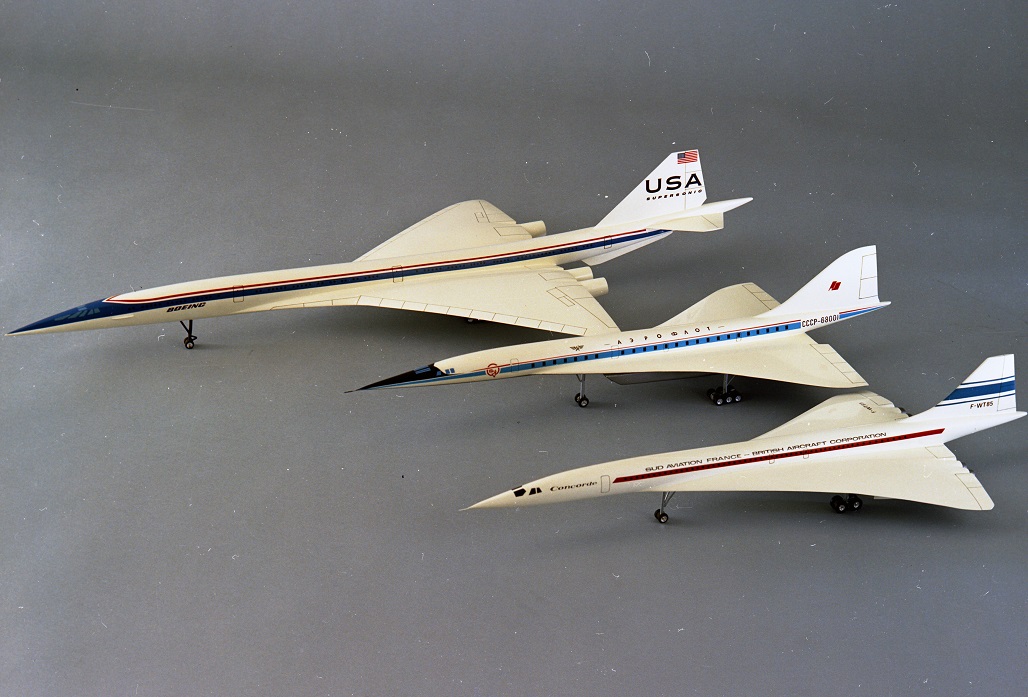
Models of the modified B2707 with a fixed delta wing and the Russian TU144 and Concorde. Congress was now deeply worried at both the rising cost of the 2707 project and growing public disquiet — led by the famous Charles Lindbergh — over its engine noise and sonic boom.
Finally, environmental concerns and critics of government spending won the day and in March 1971, the US Senate and the House of Representatives voted to kill the project. At the time, the US investment in the B2707 was $1 billion (1971 dollars).
The B2707, together with the Concorde, was a watershed in commercial aviation. It was the first time that environmental concerns sounded the death knell of a project.
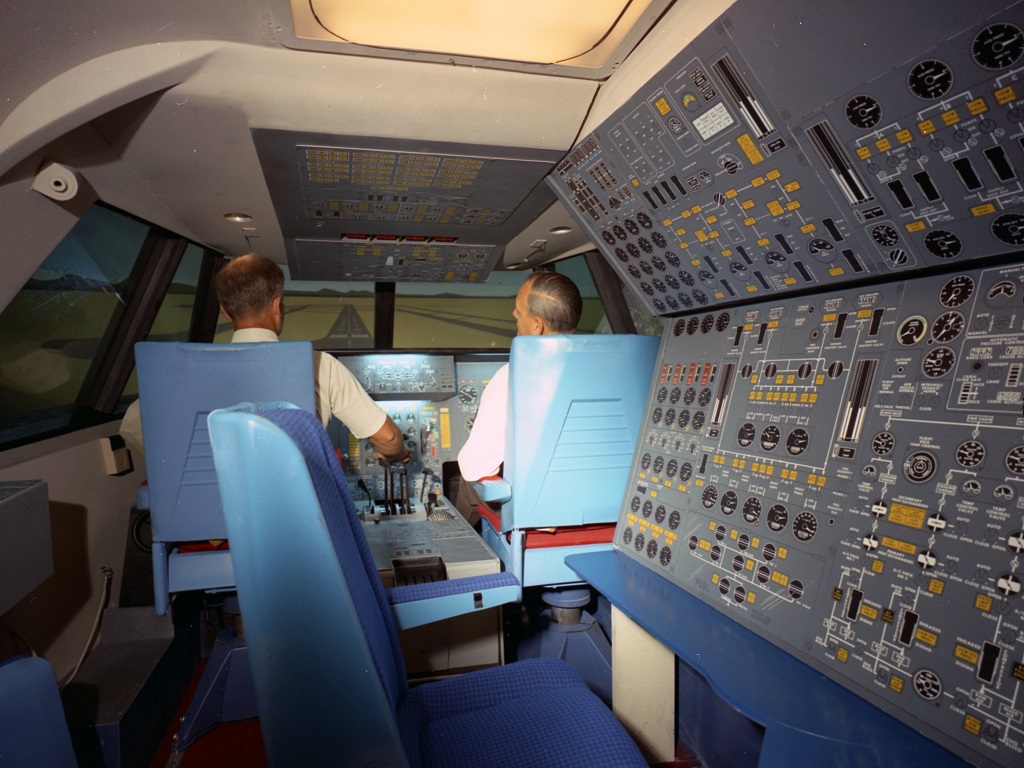
Flightdeck of the Boeing 2707. Boeing Historical Archives. At the same time, airline concerns over operating costs of aircraft had also become significant, flagging that the future in aviation was more than ever to be focused on reducing the cost of flying and flying’s effect on the environment.
Despite the host of problems associated with supersonic travel, serious studies continued as aircraft manufacturers searched for answers on how to break the environmental and economic barriers of supersonic flight.
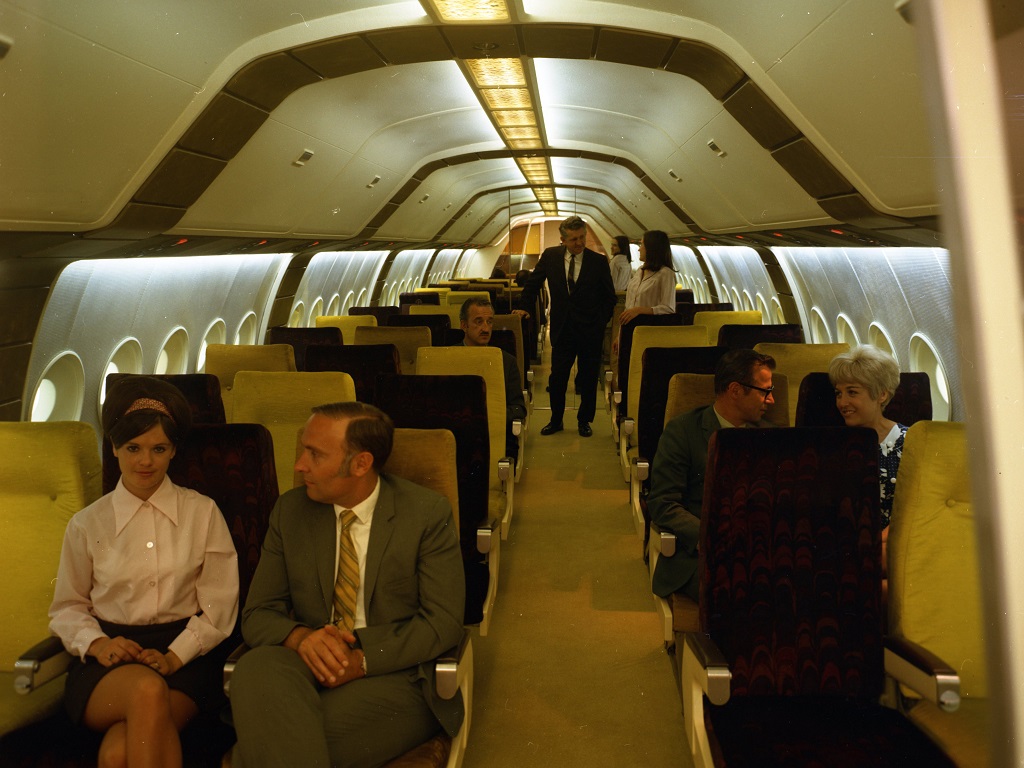
Another cabin mockup concept for the B2707 During the mid-1990s, Boeing teamed with McDonnell Douglas, Pratt & Whitney and General Electric in a $1.3 billion NASA-funded study into a High-Speed Civil Transport (HSCT).
The study aircraft would carry 290 passengers at Mach 2.4 (1,585mph or 2,551km/h) and would be able to fly from Los Angeles to Tokyo in 4.5 hours compared to the typical 10.3 hours. For the research, a Tu-144 was restored to flying condition.
But the challenge of designing an aircraft that would carry three times the payload of the Concorde double the distance without hiking standard ticket prices and not affecting the environment proved impossible and the project was dropped.
The post